


What Is An Oil Boom? A Beginner's Guide To Oil Spill Containment
If you have never worked in the marine, industrial or environmental safety space before, the term oil booms might sound unfamiliar. But once you understand what it does, you realise how important this simple looking product actually is.
This blog is written for anyone doing early research on this product, whether you are a buyer, a business owner or someone simply trying to understand the basics before reaching out to a supplier.
What Is An Oil Boom
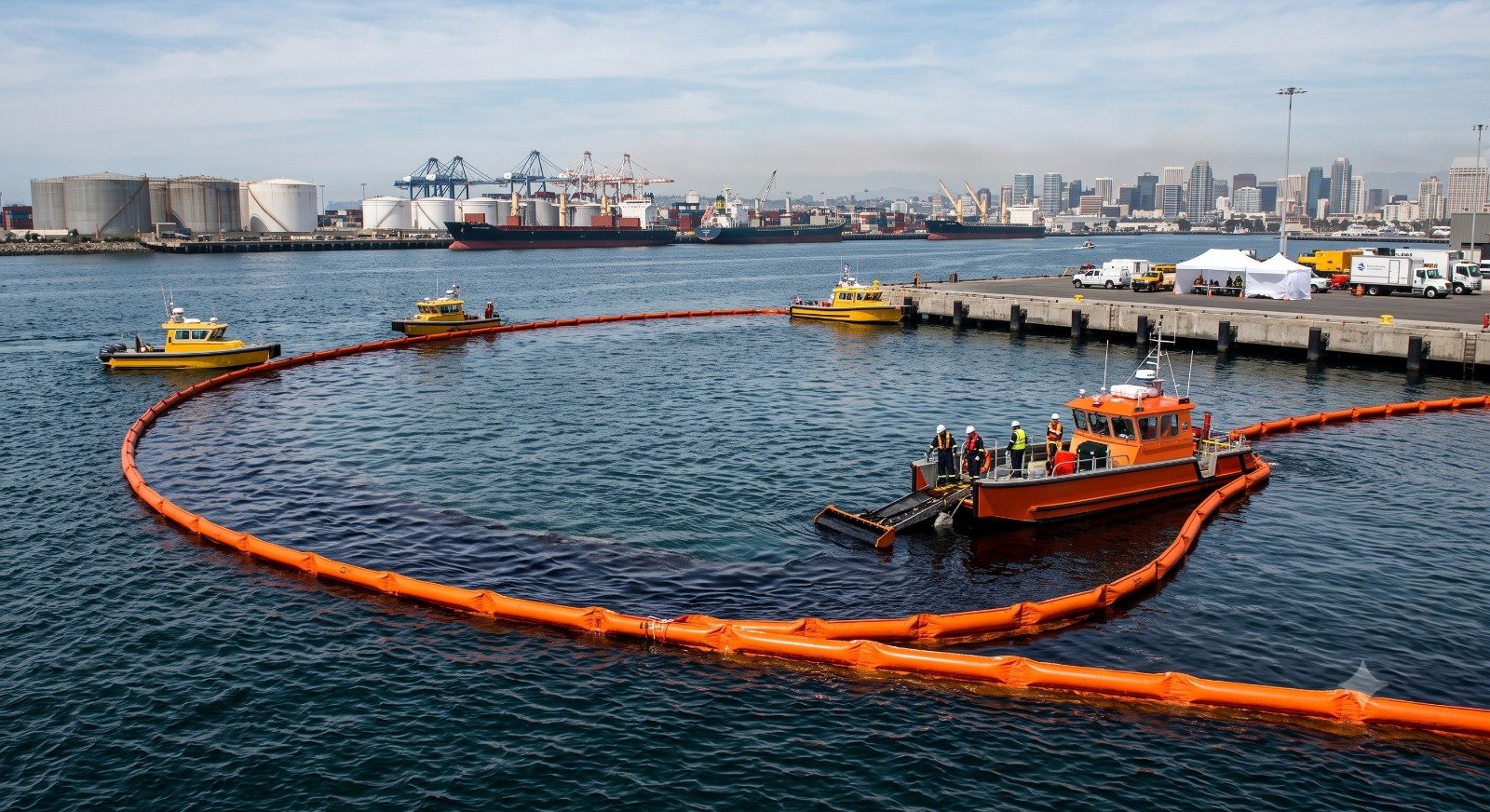
An oil boom is a floating barrier used to contain and control the spread of oil spilled on water. Think of it as a physical fence that sits on the surface of water and stops oil from spreading further.
- It floats on top of water using buoyancy chambers
- It has a skirt that hangs below the waterline to stop oil from slipping under
- It is connected in sections so it can cover long stretches of water
- It is used in rivers, ports, lakes, harbours and open sea areas
In simple words, whenever there is an oil leak or spill on water, an oil boom is the first line of defence used to stop the damage from spreading.
How Does Oil Booms Work
Understanding how does oil booms work becomes much easier once you break it into its basic parts.
- The floatation section keeps the boom on the surface of the water
- The skirt section hangs down and blocks oil from moving underneath
- A tension cable or chain runs through the boom to give it strength against water current and wind
- Connectors join multiple sections together to form one continuous barrier
Once deployed, the boom essentially traps the oil within a limited area. This makes it far easier for cleanup teams to skim, absorb or remove the oil safely, instead of chasing it across open water.
The material used to make the boom plays a big role here. This is where pvc coated fabric for beginners becomes relevant, since most quality oil booms are made using PVC or PVDF coated fabric rather than plain plastic sheets.
Why PVC Coated Fabric Is Used For Oil Booms
If you are new to this industry, it helps to understand why fabric choice matters so much for a product like this.
- PVC coated fabric is fully waterproof, which is essential since the boom sits in water continuously
- It resists oil, chemicals and fuel without breaking down quickly
- It stays flexible even after long term exposure to water and sunlight
- It has strong tear resistance, which matters since booms face constant wave and current pressure
- It can be welded into sealed sections, which prevents leaks at the seams
A poorly made boom with weak fabric can tear, leak or sink, which completely defeats its purpose. That is why sourcing from an experienced Oil Booms Coated Fabric Manufacturer in India matters more than people realise at first.
Where Are Oil Booms Used
Oil booms applications are wider than most people expect. Here are the common areas where they are deployed.
- Ports and harbours, to contain spills from ships and tankers
- Rivers and lakes, to protect drinking water sources and aquatic life
- Refineries and industrial plants, to control leaks near water bodies
- Offshore oil rigs, where spill risk is naturally higher
- Marinas and shipyards, during fuelling or maintenance work
- Emergency response teams, who keep booms ready for quick deployment during accidents
Different environments need different boom designs, which is why buyers should always match the boom type to the actual site conditions before purchase.
Types Of Oil Booms Worth Knowing
Since this is a beginner focused topic, it helps to know that oil booms are not all the same.
- Fence booms, which use a rigid or semi rigid wall design for calm water
- Curtain booms, which use a flexible skirt design suited for rougher water
- Inflatable booms, which are easy to store and quick to deploy in emergencies
- Fire containment booms, designed for controlled burn situations
Choosing the right type depends on water conditions, spill size and how quickly the boom needs to be deployed.
Why This Matters For Buyers And Businesses
Even if you are not directly involved in spill response, understanding this product matters if your business operates near water, handles fuel or chemicals, or falls under environmental compliance requirements.
- Many ports and industrial sites are legally required to keep spill containment equipment ready
- Having reliable oil booms on standby reduces environmental damage and financial penalties
- Quality fabric construction means the equipment actually works when it is needed most
This is why sourcing from a proven name among Fabrics Manufacturers and Supplier in India is not just a technical choice, it is a safety and compliance decision.
Conclusion
Oil booms may look like a simple product from the outside, but the engineering and fabric quality behind them decide whether they actually work during a real emergency.
For anyone doing early research on this product, the basics are simple. It is a floating barrier, made from strong waterproof fabric, designed to contain oil spills before they spread further.
If your business operates near water bodies or handles fuel and chemicals, understanding this product now puts you ahead when the time comes to actually purchase one.
Lucky International works as a dependable manufacturer and supplier of PVC and PVDF coated fabric products, including oil booms built for real world site conditions across India.
FAQ
1. What is an oil boom used for?
An oil boom is used to contain and control the spread of oil spills on water, making cleanup faster and easier while protecting the surrounding environment.
2. How does an oil boom stop oil from spreading?
It floats on the surface using buoyancy chambers while a skirt hangs below the waterline, physically blocking oil from moving past the barrier.
3. What material is best for making oil booms?
PVC or PVDF coated fabric is preferred since it is waterproof, oil resistant, flexible and strong enough to handle constant water pressure and movement.
4. Where are oil booms commonly used?
They are commonly used in ports, harbours, rivers, refineries, offshore rigs and marinas, wherever there is a risk of oil or fuel spilling into water.
5. Are all oil booms the same?
No, different designs like fence booms, curtain booms and inflatable booms are used depending on water conditions and how quickly deployment is needed.
6. Who should consider buying oil booms?
Ports, refineries, shipping companies, industrial plants near water bodies and emergency response teams should keep quality oil booms ready as part of spill containment planning.
7. Where can businesses source reliable oil booms in India?
Businesses can source dependable, quality tested oil booms from established Fabrics Manufacturers and Supplier in India like Lucky International, known for consistent fabric quality and technical support.