


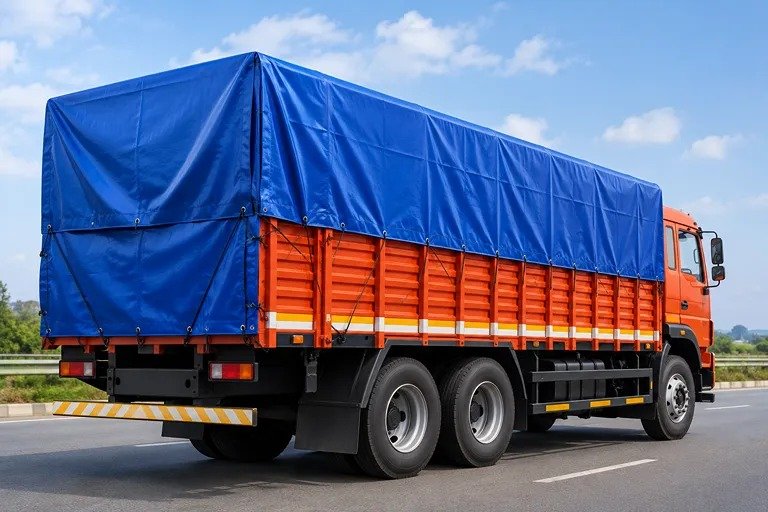
When you run a fleet, a cover is never just a cover. It protects the load, the driver's schedule and your name with the customer. A tarpaulin that leaks or tears on the road can mean damaged goods, delays and repeat replacement costs.
Most of these problems start with the fabric. This truck tarpaulin fabric buying guide explains what to look at, so you can choose with confidence.
Why Truck Tarpaulin Fabric Matters More Than the Cover Itself
Two covers can look the same and behave very differently on the road. The difference is the cloth. The fabric decides how well the cover handles rain, sun, rubbing and long hours of wind.
For a fleet, this matters even more. One weak cover is a small problem. A weak choice repeated across many trucks becomes a large one. Choosing the right fabric once saves you from solving the same problem again and again.
What Is PVC Truck Cover Fabric?
PVC truck cover fabric is a polyester cloth coated with PVC. The polyester gives it strength. The PVC coating makes it waterproof and tough, and it also helps the fabric resist rough handling.
This is why PVC coated fabric is a common choice for truck covers. It is made for outdoor use, it can be welded into large covers, and it is easy to clean. For fleets that run long routes in changing weather, that mix is hard to beat.
Truck Side Curtain Fabric: What to Look For
Curtain-sided trailers use side curtains that slide open and shut. Truck side curtain fabric has a harder job than a simple top cover. It faces wind pressure while moving, and it is pulled, folded and handled again and again at every loading stop.
When you choose side curtain fabric, check these points:
- The fabric should feel firm and even, with a smooth coating on both sides.
- It should handle repeated sliding and folding without cracking.
- The edges and fittings should be strong, since this is where wear begins.
- The curtain should hang flat and sit tight when closed.
If the fabric is made for this kind of movement, the curtains will last longer and look better on the road.
Tarpaulin Durability: What Actually Makes It Last
Tarpaulin durability is not about one single feature. It comes from several things working together:
- A good base cloth: strong polyester gives the cover its pulling strength.
- An even coating: the PVC layer keeps water out and protects the cloth inside.
- Welded seams: welded joins stay sealed and avoid the tiny holes that stitching leaves.
- Strong edges: reinforced hems and fittings stop tears from starting at tie-down points.
- Outdoor-ready fabric: the cloth should be made to handle sun, rain and dust.
Look at each of these when you compare options. A cover that is strong in one place but weak in another will fail at the weak point.
Choosing Fleet Cover Material for Different Loads
Not every truck in your fleet carries the same cargo. The right fleet cover material depends on what goes under it.
- Loose goods like sand, gravel or grain: pick a fabric that handles weight and rubbing.
- Boxed or palletised goods: pick a cover that keeps out rain and dust and sits tight.
- Goods that spoil in heat: pick a fabric made to hold up in strong sun.
If your fleet carries mixed loads, talk to your supplier about the routes, the cargo and how often the covers are used. A good supplier will help you match the fabric to the job and not just sell you whatever is in stock.
Why Welded Seams and Made-to-Measure Fit Help Fleets
For a fleet, fit is a cost issue as well as a comfort one. A cover that is too loose flaps in the wind and wears out fast. A cover that is too small leaves gaps and lets rain in.
Made-to-measure covers sit tighter and flap less. When the seams are welded as well, the cover keeps water out and holds its shape for longer. Giving your supplier exact sizes for each truck type is a small step that pays off on the road.
How to Look After Truck Tarpaulin Fabric
Good fabric lasts longer with simple care. Share these habits with your drivers:
- Wash the cover with plain water and mild soap.
- Let it dry fully before folding.
- Do not drag it on rough ground.
- Check edges, eyelets and seams from time to time.
A few minutes of care at regular gaps can save a lot of money across a whole fleet.
Questions to Ask a Truck Tarpaulin Fabric Manufacturer
Before you place an order, ask a few clear questions to any Truck Tarpaulin Fabric Manufacturer or supplier:
- What fabric is used, and who makes the base cloth?
- Are the seams welded or stitched?
- Can the covers be made to the size of each truck?
- What edges and fittings come with the cover?
- How should the fabric be cleaned and stored?
A supplier who knows the fabric well will answer these easily. If the answers are vague, that tells you something too.
Why Choose Lucky International for Truck Tarpaulin Fabric
If you want fabric that fleets can rely on, here is what Lucky International offers:
- Trusted fabric source: The PVC and PVDF coated fabric is engineered by SIOEN Industries of Belgium.
- Made to your needs: The fabric is cut and welded to your size and requirements.
- Fabric-first focus: Our work is built around PVC and PVDF coated fabric, so you can talk to us about the cloth, the coating and the finish.
- Support for fleet buyers: Whether you run a few trucks or a large fleet, we can help you match the fabric to your loads and routes.
Frequently Asked Questions
Which fabric is best for truck tarpaulins?
PVC coated polyester is a common choice. It is strong, waterproof and made for outdoor use.
What is truck side curtain fabric?
It is the coated fabric used for the sliding side curtains on curtain-sided trailers.
What affects tarpaulin durability the most?
The base cloth, the coating, the seams and the edges all play a part. Weakness in any one of them shortens the life of the cover.
Should fleets choose custom-fit covers?
Yes, in most cases. A cover made to size sits tighter, flaps less and protects the load better.