


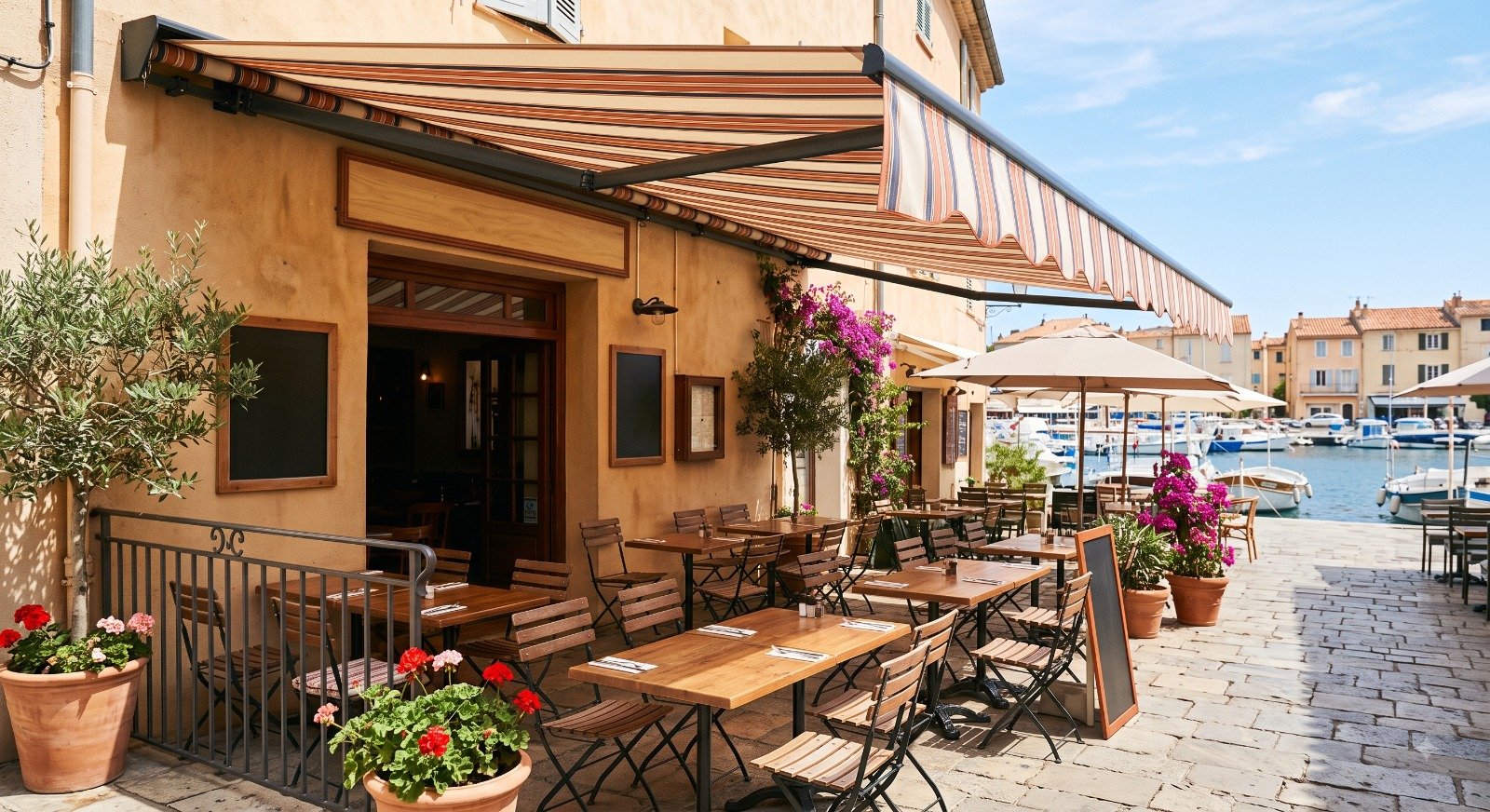
Sun Awning Fabric Across Applications: Retail, Residential and Beyond
Awnings tend to get filed away as a small detail — a strip of fabric over a doorway, a shade over a window. But look closer at where sun awning fabric actually shows up, and it's a much wider list than most people expect: retail storefronts, residential balconies, restaurant patios, office entrances, and parking areas all rely on the same core material doing very different jobs.
For businesses sourcing awning fabric at scale — shopfitters, architects, contractors, and facility managers — understanding how the application changes the fabric specification is what separates a shade structure that lasts a decade from one that fails within a season.
Retail Storefronts: Branding Meets Weather Protection
For retail businesses, an awning does double duty — it protects the storefront and signage from sun and rain damage, and it's often the first branded element a customer sees. Retail storefront awning fabric needs to hold color under constant UV exposure, since a faded or discolored awning undercuts the exact branding purpose it's meant to serve.
Key requirements for shop front awning fabric include:
- UV and color-fastness — storefronts are exposed to direct sun for most of the day, so pigment retention matters more here than in almost any other application
- Print and branding compatibility — many retail awnings carry logos or signage, which means the fabric needs to hold sharp printed detail
- Rigidity under wind load — storefront awnings often project over pedestrian walkways, so the fabric and frame need to resist flutter and wind-driven stress at the edges
Residential Balconies: Comfort and Space Efficiency
Residential balcony awning structures serve a different purpose entirely — they're about extending usable outdoor space rather than branding. Homeowners and housing developments use retractable or fixed balcony awnings to cut direct heat gain into apartments and create a shaded outdoor sitting area.
For residential use, the priorities shift toward:
- Heat reduction — the fabric needs to block a meaningful percentage of solar heat, not just visible light, since the goal is a cooler balcony space
- Compact retractability — many residential installations use retractable awning systems, so the fabric has to fold and unfold repeatedly without creasing or losing its coating
- Low-maintenance coating — residential buyers generally want a fabric that resists dirt buildup and doesn't need frequent cleaning or recoating
Restaurants, Patios, and Outdoor Seating
Sun shade application in the hospitality sector overlaps with both retail and residential needs — visibility and branding matter, but so does guest comfort over long seating hours. Restaurant and café awnings are often larger spans than storefront awnings, which means the fabric needs higher tensile strength alongside its UV and weather resistance.
Car Parking and Institutional Shade Structures
Beyond storefronts and balconies, the same fabric technology extends into parking and institutional shade structures. Car parking shade suppliers work with a heavier-duty version of the same coated fabric — one that needs to withstand constant sun exposure with minimal shrinkage or sagging over large spans, since parking shades typically cover far more area per panel than a storefront or balcony awning.
This is where Awning, Canopies & Car Parking Shade Suppliers increasingly serve a single client across multiple structure types — a commercial complex, for instance, might need storefront awnings, a canopy at the entrance, and shade structures across its parking area, all specified from the same fabric range for consistency in appearance and performance.
Choosing the Right Fabric for the Application
The common thread across every one of these use cases is that awning fabric isn't a one-specification product. A fabric built for retail branding won't necessarily perform as well on a large-span parking canopy, and a residential retractable awning has coating and flexibility requirements that a fixed storefront awning doesn't need to meet.
This is why sourcing from an established fabrics manufacturer and supplier in India matters — one that can specify the right coating weight, UV treatment, and tensile strength for each application rather than supplying a single generic awning fabric across every project type. Lucky International works across this full range, supplying coated fabric suited to retail, residential, hospitality, and parking shade applications from a single technical-textile product line.
FAQs
Q: Is the same awning fabric used for storefronts and balconies?
Not usually. While the base coating technology is often similar, storefront fabric is typically specified for color-fastness and print quality, while residential balcony fabric is specified more for heat reduction and repeated retractability.
Q: How long does awning fabric typically last?
This depends heavily on the application and exposure, but a properly specified PVC or PVDF-coated awning fabric can last several years before recoating or replacement is needed, provided it's matched correctly to its use case.
Q: What should businesses look for in a sun awning application supplier?
Beyond the fabric itself, look for a supplier that can advise on coating type, tensile strength, and UV treatment based on the specific installation — storefront, residential, hospitality, or parking — rather than offering one fabric for every project.
Q: Can the same supplier handle both awnings and car parking shade structures?
Yes — many technical-textile suppliers, including Awning, Canopies & Car Parking Shade Suppliers serving commercial clients, work across both categories, since the underlying coated fabric technology is shared even though the structural specifications differ.