


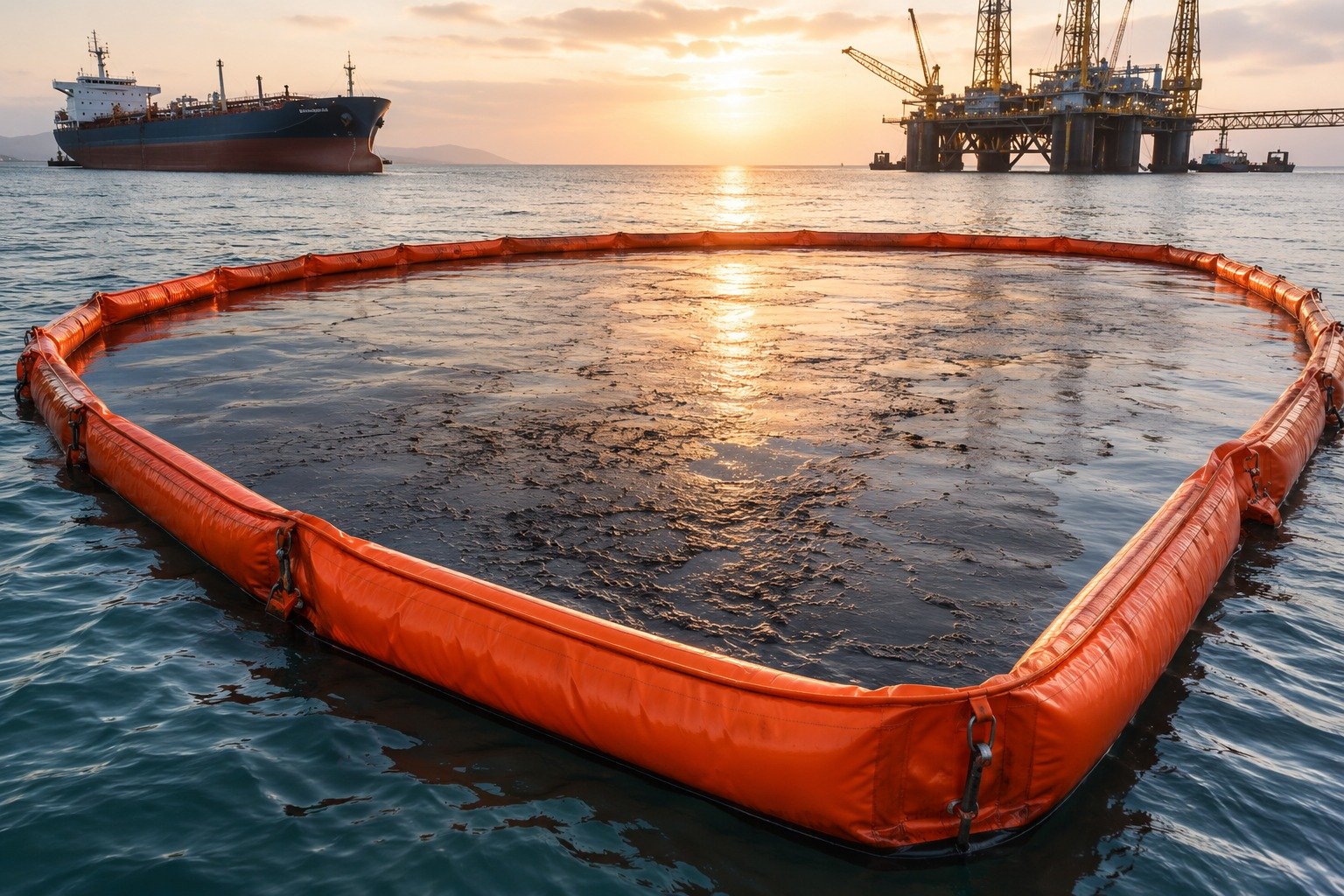
When a spill happens, there's no room for a slow supply chain. Whether it's a port authority managing routine vessel operations, a refinery with containment protocols on the line, or a coastal project planning ahead of monsoon season, the fabric behind your oil boom has to perform the moment it's deployed no exceptions, no delays.
This is exactly why sourcing decisions matter so much in this category. An oil boom is only as reliable as the material it's built from, and that starts long before it ever touches water. Here's a practical oil boom fabric sourcing guide for procurement teams evaluating suppliers for ports, refineries, and coastal spill response projects.
Why the Fabric Matters More Than the Boom Itself
It's easy to think of an oil boom as a finished product, but really, it's the fabric that determines whether it holds up in the field. The material needs to resist oil, fuel, and chemical exposure without degrading, stay flexible in cold water, and hold its buoyancy and seam strength under constant wave action and tidal movement.
A boom built from a weak or poorly coated fabric might look fine in storage and still fail within hours of real deployment. That's the risk procurement teams are really managing when they choose a supplier.
What Ports and Refineries Should Look For in a Supplier
1. Chemical and oil resistance of the base material The fabric needs to hold its integrity when in direct, prolonged contact with crude oil, refined fuels, and other hydrocarbons — not just resist a splash, but stand up to sustained exposure.
2. Seam and weld strength Booms fail at the seams far more often than across the fabric itself. A reliable supplier should be able to speak clearly to their welding and bonding process, not just the fabric spec sheet.
3. UV and weather stability Booms deployed near ports and refineries often sit in storage or standby for long stretches under open sky. UV-stabilized coating keeps the material from becoming brittle before it's ever used.
4. Buoyancy consistency Uneven buoyancy across the length of a boom creates gaps in containment. This comes down to consistent fabric weight and coating thickness during manufacturing, not just the flotation foam inside.
5. Fast turnaround and stock availability Coastal and refinery projects often need booms on a tight timeline, whether for a planned project or a compliance requirement. A supplier who can only offer long lead times isn't much use when a deployment window is fixed.
6. Certification and testing transparency Ask for test data on tensile strength, oil resistance, and tear resistance rather than relying on marketing claims. A serious manufacturer will have this documentation ready.
Where Oil Boom Fabric Gets Used
- Port entrances and harbor operations, for routine vessel refueling and loading safeguards
- Refinery water intake and discharge points
- Coastal spill response and emergency containment stockpiles
- Offshore support vessels and marine terminals
- River and estuary containment near industrial zones
Each of these settings puts slightly different demands on the fabric — a refinery boom sitting near hydrocarbon-heavy water isn't under quite the same stress as one held in reserve at a port for emergency use which is part of why sourcing the right specification matters as much as sourcing the right price.
Sourcing From Manufacturers vs. Traders
There's a real difference between buying from a trader who resells someone else's stock and sourcing directly from fabric manufacturers and supplier in India who control the coating and fabrication process themselves. Direct manufacturers can usually speak to material specifications in detail, adjust thickness or coating for your specific water conditions, and maintain more consistent lead times since they're not dependent on a third party's stock.
For ports and refineries especially, where compliance documentation and consistent quality matter, working with an established manufacturer rather than an intermediary tends to reduce a lot of downstream risk.
Lucky International works with ports, refineries, and coastal project teams as one of the oil spill boom fabric manufacturers producing coated fabric built for sustained hydrocarbon and marine exposure, with the flexibility to adjust specification to the deployment environment.
Frequently Asked Questions
What fabric is best for oil boom containment?
PVC and PVDF coated fabrics are widely used because they combine oil and chemical resistance with the flexibility and seam strength needed for continuous marine deployment.
How often should port authorities replace oil booms?
It depends on usage and storage conditions, but UV exposure and repeated handling gradually reduce fabric performance, so periodic inspection and testing matter more than a fixed replacement schedule.
Can oil boom fabric be customized for specific water conditions?
Yes. Coating thickness, buoyancy, and seam construction can be adjusted based on whether the boom is meant for calm port waters, tidal coastal zones, or higher-exposure refinery settings.
Why choose a manufacturer over a trading supplier?
A manufacturer controls the coating and fabrication process directly, which generally means better consistency, clearer technical documentation, and more reliable lead times for time-sensitive projects.