


If you own a tensile structure, canopy, awning, or cover made from PVC coated fabric, you already know how tough and reliable this material is. But like anything exposed to sun, rain, dust, and wind all year round, it needs a little regular care to keep looking and performing its best. The good news is that fabric maintenance for PVC coated fabric is simple, quick, and doesn't require any special skills or expensive equipment.
In this guide, we'll walk you through exactly how to clean PVC fabric, what to avoid, and how a few small habits can keep your structure looking fresh for years to come.
What Is Fabric Maintenance, Really?
Fabric maintenance simply means the small, routine steps you take to keep a coated fabric surface clean, flexible, and free from buildup that can affect its appearance or lifespan. For PVC coated fabric, this mostly comes down to regular cleaning and a quick visual check every so often, with no complicated schedule or product list required.
Because PVC coated fabric is designed to handle outdoor conditions, it's naturally resistant to a lot of the wear that would damage other materials. Maintenance is really about supporting that natural durability, not fighting against a weak point.
Why Cleaning Your PVC Fabric Matters
Dust, pollen, bird droppings, and general airborne grime settle on any outdoor surface over time. Left alone, this buildup can make the surface look dull or patchy, trap moisture against the fabric in shaded areas, and encourage algae or mildew spots, particularly in humid climates. None of this is a sign the fabric is failing; it's simply a natural result of being outdoors. A simple wash restores the surface and keeps things looking sharp for visitors, customers, or anyone who sees your structure.
How to Clean PVC Fabric: Step-by-Step
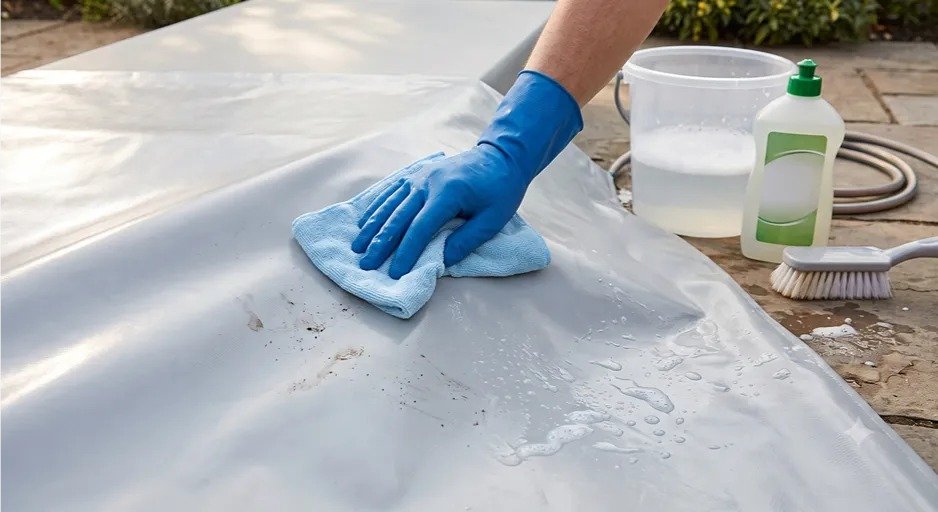
Cleaning PVC coated fabric is a straightforward job you can usually do yourself with basic household tools: a soft-bristle brush or sponge, mild soap or a gentle detergent, a bucket of lukewarm water, a hose for rinsing, and a soft cloth for drying.
Remove loose debris first. Before introducing water, gently brush or sweep off loose dust, leaves, and dirt so you don't turn dry dirt into a muddy paste.
Prepare a mild soapy solution. Mix a small amount of mild soap into lukewarm water. Avoid strong detergents, bleach, or solvent-based cleaners, as they aren't needed and can dull the surface finish over time.
Wash gently in sections. Using your soft brush or sponge, wash from top to bottom so dirty water runs off areas you haven't cleaned yet.
Rinse thoroughly. Rinse each section well with clean water before it dries, so no soap residue is left behind.
Let it air dry. PVC coated fabric dries quickly on its own. A soft cloth can help speed things up on lower, reachable sections.
Check for problem spots. Treat any stubborn mark, mildew spot, or sap patch individually with a slightly stronger mild soap solution, rather than using harsh chemicals across the whole surface.
Most structures only need this kind of wash a couple of times a year, or a bit more often in dusty, coastal, or high-pollen areas.
Tensile Fabric Maintenance Tips for Larger Structures
Tensile structures, canopies, and large covers have more surface area, but the same principles apply. Choose a dry, mild day for cleaning so the fabric dries fully afterward. Pay closer attention to seams and low points, since water tends to pool there, and check that gutters and corners aren't collecting standing water, leaves, or debris, as this is where mildew is most likely to start. Cleaning day is also a good time to glance over the fittings and edges for anything that looks out of place.
What to Avoid When Cleaning Coated Fabric
A few simple don'ts go a long way. Avoid high-pressure washers directly on the fabric; a gentle hose rinse is enough. Skip bleach, solvents, or abrasive scouring pads, as these can affect the surface finish and aren't necessary for effective cleaning. Don't scrub aggressively at stains; patience with a mild soap solution works better than force. And don't leave small spots untreated for too long, since catching a mark early is always easier than dealing with it after months of buildup.
A Few Extra Care Habits
Beyond cleaning, a little everyday awareness helps too. Trim overhanging branches that drop sap or leaves, keep the surrounding area tidy, and take a quick look after heavy rain or storms. These small habits take just a few minutes but make a real difference over time.
Why Choose LUCKY-TECH Membranes
Good maintenance only pays off if the fabric itself is built to last in the first place, and that starts with where it comes from. LUCKY-TECH Membranes works with coated textiles engineered by SIOEN Industries, a well-established name in technical fabrics, and brings that quality fabric to Indian customers through in-house design, cutting, and welding tailored to each project's specifications.
Here's what sets LUCKY-TECH Membranes apart as a coated fabric partner:
- Trusted fabric sourcing. Working with SIOEN-engineered PVC and PVDF coated textiles means the base material is built for demanding outdoor use from the start.
- Customised to your project. Every panel is designed, cut, and welded in-house to match the exact dimensions and requirements of your structure, rather than offered as a one-size-fits-all product.
- Wide product range. From tensile membranes and canopies to truck covers, roll-up doors, and more, the same quality fabric standard runs across the full range.
- Support beyond the sale. Guidance on care and maintenance, like the tips in this guide, helps customers get the most out of their structures long after installation.
For anyone comparing Fabrics Manufacturers and Supplier options, this combination of proven fabric quality and made-to-order craftsmanship is what makes LUCKY-TECH Membranes a dependable choice.
Frequently Asked Questions
How often should I clean PVC coated fabric?
Two to three times a year is enough for most locations. Dustier or more humid environments may benefit from slightly more frequent cleaning.
Can I clean PVC fabric myself, or do I need a professional?
Routine cleaning is easy enough to do yourself with mild soap, water, and a soft brush. Professional help is only really needed for very large structures or hard-to-reach areas.
Is it normal for coated fabric to develop small surface marks over time?
Yes, a bit of surface dust or the occasional mark is completely normal for anything used outdoors. Regular cleaning keeps this from building up.
What's the best way to store PVC fabric covers when not in use?
Make sure the fabric is clean and completely dry before folding or storing it, and keep it in a cool, dry place away from direct sunlight when possible.