


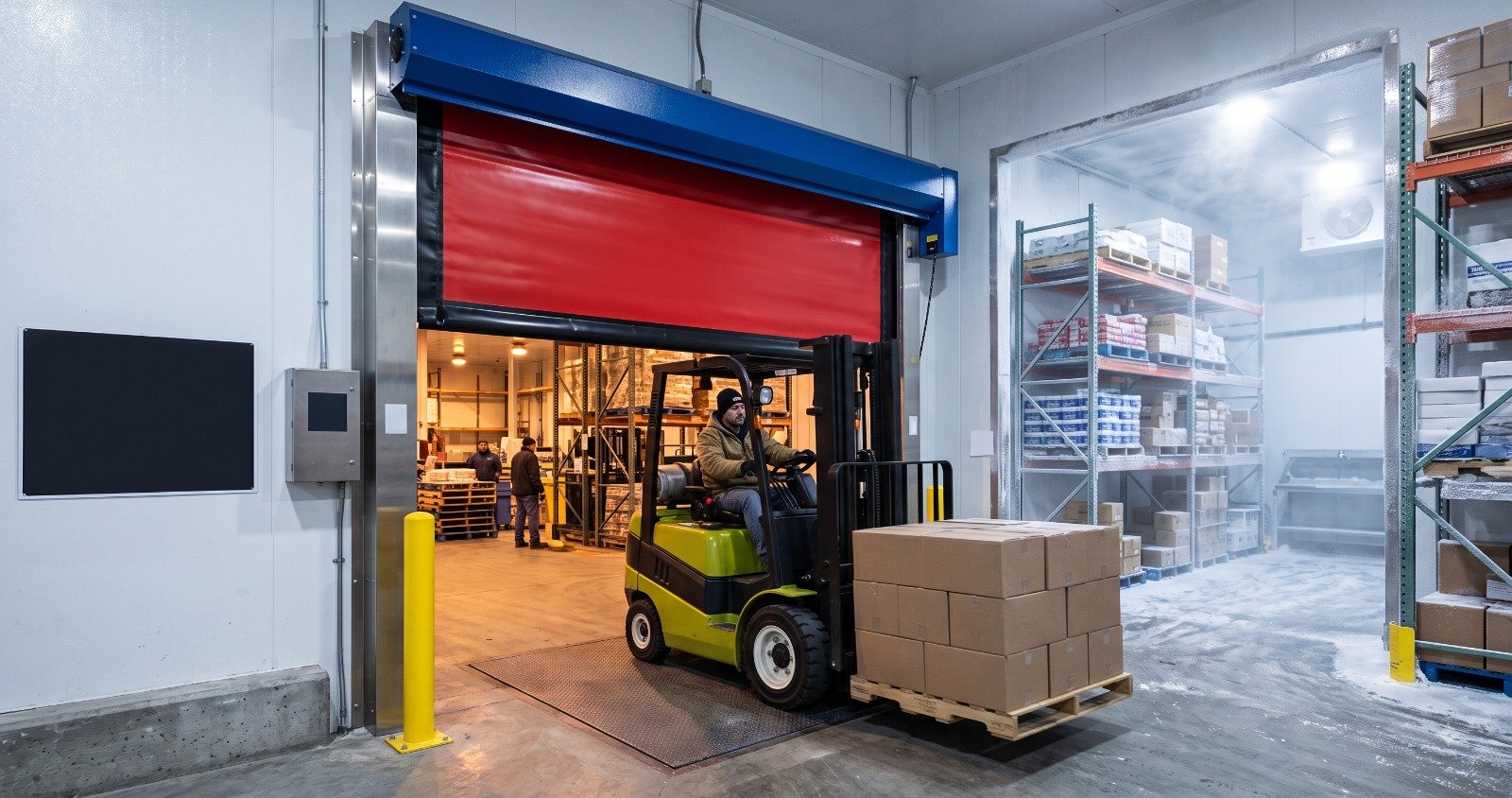
High Speed Roll-Up Door Buying Checklist for Cold Storage
Cold storage operators don't get a second chance when a door fails. One stuck door during peak season can mean spoiled stock, a compressor working overtime, and a maintenance call that just can't wait. If you've ever dealt with a jammed roll-up door in the middle of a busy dispatch schedule, you already know why sourcing the right one matters more than most people think.
Buying a high-speed roll-up door isn't like buying a regular shutter. Cold storage brings its own set of demands constant temperature cycling, moisture, forklift traffic, and doors that need to open and close hundreds of times a day without missing a beat. So before you sign off on a supplier, here's a practical high speed roll-up door buying checklist worth going through.
1. Check the Fabric, Not Just the Door Speed
Everyone talks about opening speed, and yes, it matters faster cycles mean less cold air escaping. But the fabric curtain itself is what determines how long that speed actually lasts.
Look for:
- PVC-coated polyester fabric rated for low-temperature flexibility, so it doesn't stiffen or crack in cold rooms
- Reinforced edges that hold up against repeated tension from the motor
- Anti-static or food-grade coating, if the storage handles packaged food or pharma products
A door that opens fast on day one but turns brittle within a year isn't saving anyone money.
2. Ask About Insulation Properties
Cold storage lives or dies on temperature control, so insulation isn't optional. An insulated rapid door supply setup typically includes double-layer fabric with an air gap or foam core, which helps maintain the temperature differential between the cold room and the outside dock area.
Ask your supplier directly:
- What's the door's thermal transmittance (U-value)?
- Is the seal system designed for cold-to-ambient transitions, or just general warehouse use?
- Does the bottom seal adjust automatically to floor unevenness?
If a supplier can't answer these clearly, that's usually a sign they're supplying generic warehouse doors rather than something built for cold chain conditions.
3. Cycle Rating and Motor Durability
High-traffic cold storage doors can cycle anywhere from 50 to 300+ times a day depending on the facility. A door rated for occasional use in a general warehouse simply won't hold up under that kind of load.
Check the manufacturer's stated cycle life, and more importantly, ask what happens after that cycle count is reached is it a full motor replacement, or just routine servicing? This single detail affects your long-term maintenance cost far more than the upfront price of the door.
4. Safety Features Aren't Negotiable
Fast-moving doors near forklift zones need proper safety mechanisms:
- Photo-eye sensors for auto-reversal
- Emergency manual override in case of power failure
- Wind/pressure resistance if the door faces an exterior loading bay
These aren't premium add-ons they're baseline requirements for any facility with regular vehicle and staff movement near the door.
5. Vet the Supplier, Not Just the Product Spec Sheet
This is where a lot of buyers slip up. A good spec sheet means little if the supplier can't back it with real manufacturing capability, warranty support, or after-sales service.
When evaluating a cold storage fabric door exporter, ask about:
- In-house fabric production versus imported/resold rolls
- Warranty terms specifically for cold storage applications (not general warehouse warranty)
- Local service support for motor repairs and fabric replacement
- Reference sites they've already supplied, ideally in cold chain or food processing
A reliable warehouse door vendor should be able to walk you through real installations, not just brochure specifications.
Why This Matters for Long-Term Operations
A high-speed door might look like a small line item next to refrigeration units and racking systems, but it directly affects your energy bills, product shelf life, and daily operational flow. Getting the fabric, insulation, and motor specs right the first time avoids the far more expensive cycle of repeated repairs and premature replacement.
We work as one of the established Fabrics Manufacturers and Supplier in India, producing PVC-coated fabric for high-speed and rapid roll-up doors used across cold storage, food processing, and industrial facilities. As PVC Roll Up Door Manufacturers, Lucky International's focus stays on getting the fabric right for the specific temperature and usage conditions of each site, rather than offering one standard PVC Roll Up Door spec across every project. That difference tends to show up in how the door performs three or four years down the line, not just on installation day.
FAQs
Q1. How fast should a high-speed cold storage door open?
Most cold storage doors open in the range of 1–2.5 metres per second, depending on the model and usage frequency. Faster isn't always necessary — it should match your traffic pattern.
Q2. How often do fabric curtains need replacement in cold storage?
With good quality PVC-coated fabric, curtains typically last several years, but this depends heavily on cycle frequency, temperature range, and maintenance.
Q3. Are insulated doors necessary for all cold storage areas?
Insulated doors matter most where there's a significant temperature gap between the cold room and the outside area, such as loading docks.
Q4. What causes most high-speed door failures?
Usually it's a combination of fabric fatigue, motor wear from excessive cycling, and poor seal maintenance — not a single major fault.
Q5. Should I prioritize price or after-sales support when choosing a supplier?
After-sales support, since a lower upfront price often costs more over time if repairs and part replacements aren't readily available.