


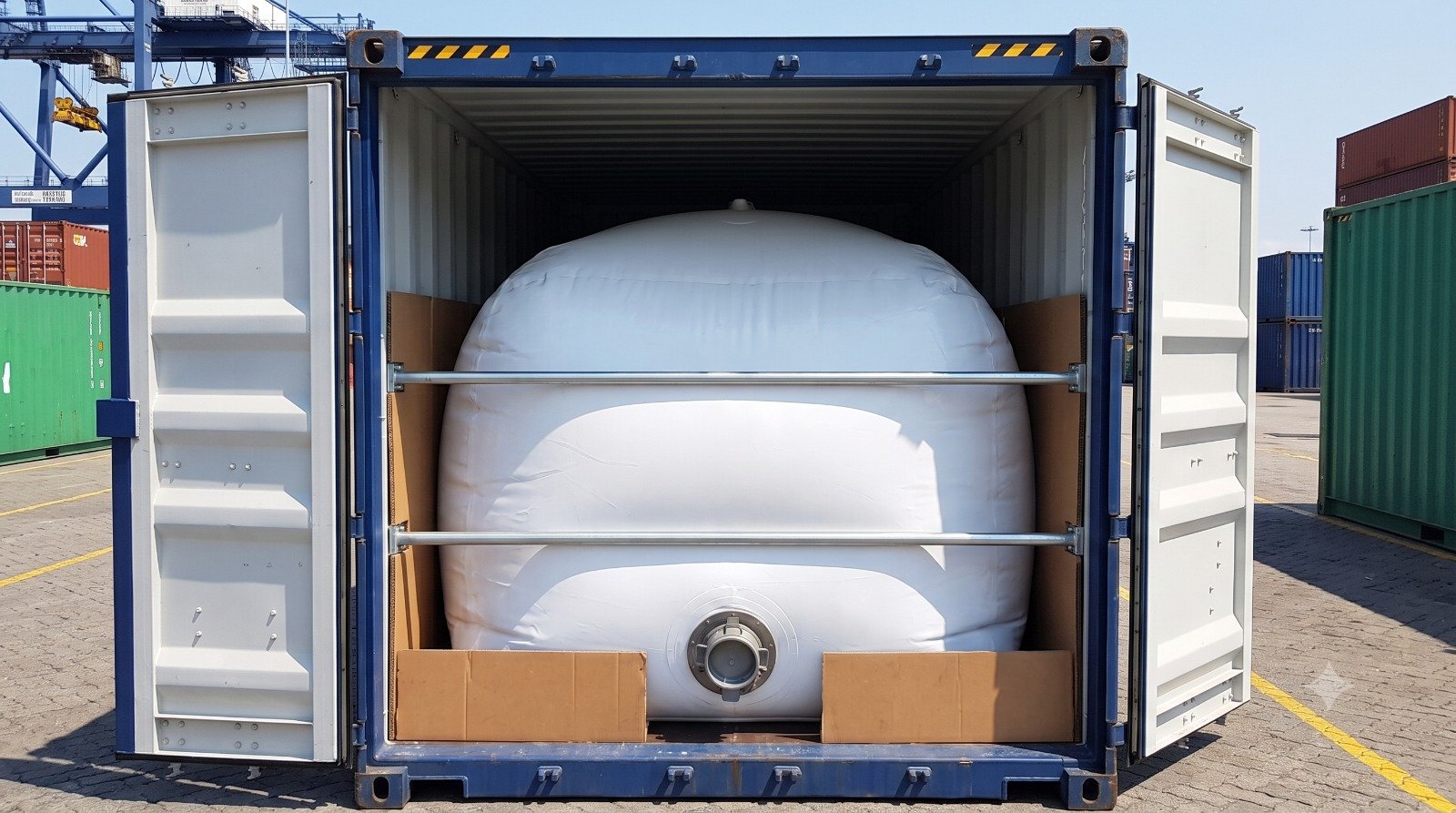
If you manufacture or assemble flexitanks, you already know the tank is only as good as the fabric it's built from. The stitching, the welding, the valve fittings — all of that matters, but none of it can compensate for a base material that wasn't built to hold thousands of litres of liquid under pressure, heat, and vibration for a 20-30 day sea voyage. This is why every serious flexitank fabric manufacturer treats fabric sourcing as a quality decision, not a procurement afterthought.
This guide walks through the checklist we'd recommend to anyone sourcing coated fabric for flexitank production whether you're setting up a new line or auditing an existing supplier relationship.
Why the Fabric Layer Deserves Its Own Checklist
A flexitank isn't really "a tank." It's a flexible, multi-layer bladder that gets filled inside a standard 20ft shipping container and has to survive loading, ocean transit, temperature swings, and unloading without a single point of failure. Unlike a rigid IBC or drum, there's no metal shell backing it up — the fabric itself is the containment.
That means flexitank material sourcing decisions ripple through the entire supply chain: a fabric that's slightly under-spec on tensile strength or seam compatibility can turn into a demurrage claim, a spoiled cargo, or a container that gets flagged at port. Getting the fabric right upfront is far cheaper than dealing with a failure downstream.
The Fabric Quality Checklist
Here's what we'd put in front of any team doing flexitank manufacturers fabric quality checklist work, whether they're evaluating a new supplier or setting internal QC benchmarks.
1. Base Polymer and Coating Consistency
The fabric should have a consistent coating weight and thickness across the entire roll — not just at the edges where it's easy to test. Uneven coating is one of the most common causes of pinhole leaks that only show up after the tank is loaded and in transit.
2. Tensile and Tear Strength
Ask for tested tensile strength figures in both the warp and weft direction, not just one. A flexitank is filled and handled in ways that stress the fabric multi-directionally, so a supplier who only reports strength in one direction isn't giving you the full picture.
3. Seam and Weld Compatibility
This is the one that's easy to overlook. Fabric that performs beautifully on its own can still fail at the seam if it isn't formulated to weld or bond cleanly. Before committing to a roll, get a welded sample tested — not just the raw fabric.
4. Chemical and UV Resistance
Depending on what's being shipped — food-grade liquids, industrial chemicals, wine, or oils — the fabric needs resistance suited to that cargo, plus enough UV stability to handle container dwell time in the sun without degrading.
5. Batch-to-Batch Traceability
Every roll should be traceable back to a batch and test certificate. If a supplier can't produce this on request, that's a sourcing red flag, not a minor inconvenience.
6. Cold-Weather Flexibility
Flexitanks travel through very different climates in a single voyage. Fabric that goes brittle at low temperatures is a real risk for winter shipping lanes — this should be tested, not assumed.
7. Certification and Documentation
For food-grade or export cargo, the fabric needs the right certifications on file (migration testing, food-contact compliance, etc.), and these should be available before the fabric goes into production, not chased down after a shipment.
Sourcing: What to Ask Your Fabric Supplier
If you're evaluating a flexitank fabric manufacturer or comparing bulk liquid tank fabric supply options, a few questions cut through most of the sales pitch quickly:
- Can I get a sample roll tested independently before committing to volume?
- What's your typical lead time for custom widths or coating specs?
- Do you provide batch test certificates with every shipment?
- What's your minimum order quantity for a new fabric grade?
A supplier who answers these plainly, with documentation to back it up, is usually one worth building a long-term relationship with.
Where Lucky Internationals Fits In
At Lucky International, we work with PVC and PVDF coated technical textiles engineered for demanding applications like flexitanks, and our team handles the cutting, welding, and fabrication to customer specification. If you're setting up or refining a fabric quality control process for flexitank production, we're happy to talk through fabric specs, sampling, and lead times for your project.
Frequently Asked Questions
What's the biggest cause of flexitank failure in transit?
Most failures trace back to weak seams or welds rather than the base fabric itself — which is why testing welded samples matters as much as testing the raw material.
How much fabric strength is "enough" for a flexitank?
It depends on the cargo, tank capacity, and route, but strength should always be verified in both fabric directions, not assumed from a single test result.
Should fabric sourcing change based on the liquid being shipped?
Yes — chemical cargo, food-grade liquids, and industrial fluids each call for different resistance properties, so the fabric spec should follow the cargo, not the other way around.
How often should batch testing happen?
Every batch should have its own test certificate — this is standard practice among serious Flexi Tank fabric Manufacturers and should never be optional.