


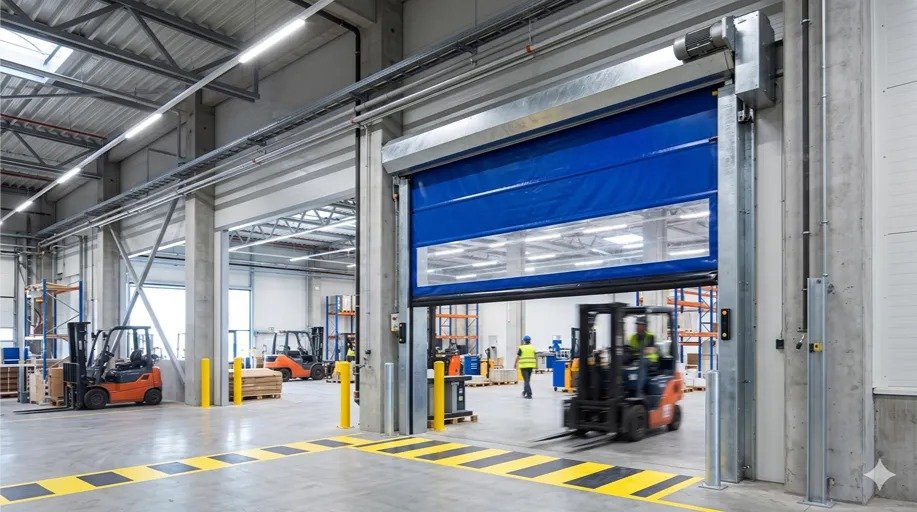
A warehouse door opens and closes all day. Trucks pass through, forklifts rush in and out, and dust, rain, and heat hit it from outside. The door only works well if the fabric can take that daily load.
This guide explains what to look for in industrial roll-up door fabric, so you can choose with confidence.
Why Fabric Matters for Warehouse Doors
Many buyers focus on the motor and the frame. But the fabric is the part that gets hit, rubbed, stretched, and exposed to the weather. If the fabric fails, the whole door stops doing its job.
Good warehouse door fabric should be strong, flexible, and easy to clean. It should also keep its shape after thousands of openings and closings. That is why PVC coated fabric and PVDF coated fabric are common choices for industrial roll-up doors.
What Is Industrial Roll-Up Door Fabric?
Industrial roll-up door fabric is a woven base material with a coating on both sides. The woven base gives strength. The coating blocks water and dust and protects the base from wear.
PVC coating is flexible, so the fabric can roll up tightly again and again without cracking. PVDF coating adds a protective top finish that helps the surface stay clean and handle outdoor exposure. Both are used in doors where the fabric must roll, bend, and take daily use.
Warehouse Door Fabric: What to Look For
Not every warehouse has the same needs. A cold store, a chemical plant, and a dry goods warehouse each ask different things from a door. Still, a few basics apply to almost every site.
- A smooth, even coating across the full sheet
- Strong, flexible material that rolls without creasing badly
- A surface that is easy to wipe and keep clean
- Good weather protection for doors that face outdoors
- Clean edges and neat finishing
When you look at a sample, check these points by hand. Small flaws often become big problems once the door is in daily use.
Factory Roll-Up Door Fabric for Busy Production Areas
Factories use roll-up doors to separate work areas, control dust, and keep movement smooth between sections. In these places, the door may open and close many times each hour.
Factory roll-up door fabric needs to stay flexible after constant movement. It should also resist wear along the edges, where the fabric meets the guides. A well-made coated fabric helps the door run smoothly and keeps the opening sealed when closed.
High Traffic Door Fabric: Built for Constant Use
Doors at loading bays and main gates see the most action. Forklifts, trolleys, and people pass through all day. This kind of use puts steady strain on the fabric.
High traffic door fabric should be tough yet flexible. If it is too stiff, it can crack at the bends. If it is too soft, it can stretch or sag. A good coated fabric finds the right balance, so the door keeps its shape and still rolls up neatly.
Ask your supplier how the fabric handles repeated rolling. A reliable partner will explain this in plain words.
Chemical Resistant Door Fabric
Some sites deal with cleaning agents, fumes, or splashes. In these areas, the door fabric should stand up to regular contact without breaking down.
PVC coated fabric is often chosen for these places because the coating forms a solid, sealed surface that is easy to wipe clean. The level of resistance depends on the chemicals involved, so it is wise to share your exact use with the supplier before you decide. Being clear about your site helps you pick the right material the first time.
Insulated Roll-Up Door Fabric
Warehouses that need to hold temperature, such as storage areas that must stay cooler, often ask about insulated roll-up door fabric. Insulation depends on how the door is built and on the material used with the fabric. It is not something one coated sheet does alone.
If this matters to you, talk to your supplier early. Explain what you want to protect, and ask what fabric options suit that goal. A good partner will tell you honestly what the fabric can do and what it cannot.
Easy Cleaning and Long Use
Dust and dirt build up fast on warehouse doors. A smooth coated surface is easy to wipe down, which helps the door look neat and work well. Regular cleaning also helps the fabric last, since dirt left on the surface can wear it down over time.
Choosing a fabric with a good surface finish makes upkeep simple for your team.
Questions to Ask Before You Buy
When you speak with any supplier, a short list of questions can help you compare options fairly.
- Which fabric suits my type of warehouse?
- Can I see a sample before I decide?
- How does the fabric handle repeated rolling?
- Is it suitable for outdoor-facing doors?
- What colours and finishes are available?
You do not need to be a fabric expert. You only need to listen for clear and honest answers.
Choosing a Warehouses Roll Up Doors Fabric Manufacturer
The right partner matters as much as the right material. A good warehouse roll up doors fabric manufacturer will help you choose the fabric that fits your site, rather than just selling what is in stock.
Look for a partner who:
- Explains the fabric in simple words
- Offers samples so you can see and feel the material
- Understands how fabric is cut and joined for door use
- Is open about what they can and cannot supply
Clear talk early on saves time and avoids costly mistakes later.
Why Choose Lucky International
Lucky International, part of the Jhaveri Group, works with PVC and PVDF coated fabric for a wide range of technical textile uses, including industrial roll-up doors. The base coated fabric is sourced from SIOEN Industries of Belgium, and the team shapes it locally into finished products to suit your requirement. This means you get a well-engineered material along with a partner who understands how it should be made up for your door. If you are planning fabric for a warehouse or factory door, you can reach the team at luckyinternational.net.