


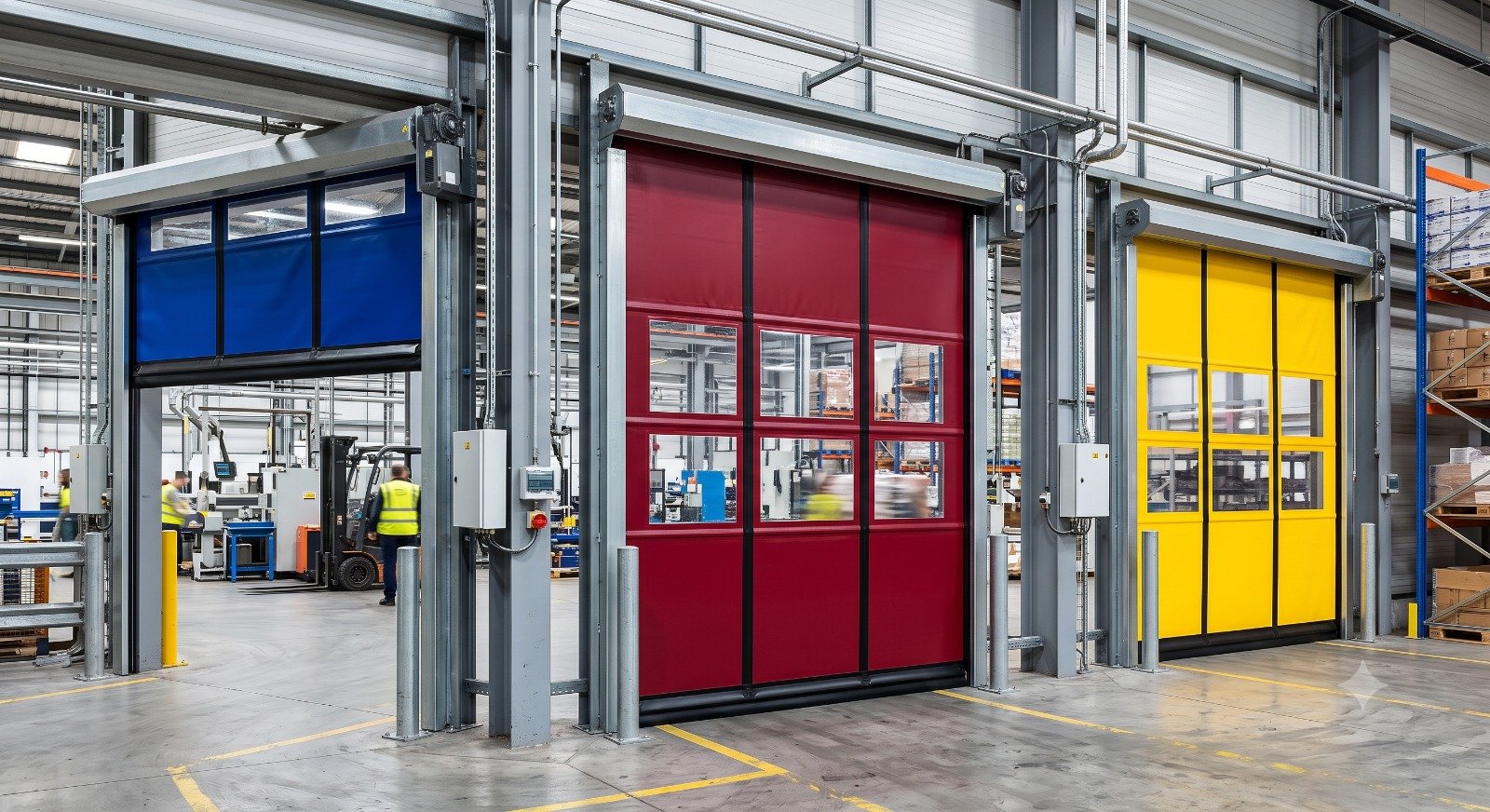
Walk through any warehouse, cold storage facility, or logistics hub and you'll see the same thing happening dozens of times an hour — a roll-up door opening and closing as forklifts and pallets move through. That constant motion puts real demand on the fabric panel itself, and it's a very different kind of stress than a door that opens once or twice a day. Fast-cycle industrial doors need a fabric that can keep up without wearing out.
What "Fast-Cycle" Actually Means for a Door Fabric
A fast-cycle door is built for high-frequency operation, sometimes opening and closing hundreds of times in a single shift. Every one of those cycles flexes the fabric panel, runs it along guide tracks, and exposes it to whatever passes through the opening — dust, temperature changes, and the occasional accidental contact from equipment.
This is where coated fabric properties matter more than they would in a low-traffic setting. A panel that isn't built for this pace will show wear at the fold lines, along the edges, or wherever it repeatedly contacts the track guides.
Why Flexibility Is the Starting Point
Flexible PVC fabric doors rely on a base material that can bend and re-bend constantly without losing its shape or strength. This flexibility comes from the coating formulation applied to the woven base fabric — a coating that's engineered to move with the fabric through thousands of open-close cycles rather than resisting that motion.
A stiffer material might hold up fine for a handful of cycles, but over time it tends to crease, crack at the fold points, or lose its ability to roll cleanly. High frequency door fabric needs to stay pliable cycle after cycle, which is really a coating and base-fabric pairing problem more than anything else.
Tear Resistance at the Points That Matter Most
The edges and mounting points of a door panel take the most repeated stress, since that's where the fabric interacts with tracks, guides, and hardware. Tear resistant door material needs a base weave strong enough to resist propagation — meaning a small nick or puncture doesn't turn into a larger tear under continued flexing.
This is one of the reasons the base fabric selection matters as much as the coating itself. A high-tenacity woven base, properly bonded with a PVC coating, gives the panel the strength to resist tearing at these stress points while still folding and rolling smoothly.
Coating Properties That Support Long-Term Performance
A handful of specific properties tend to separate a fabric that holds up under fast-cycle use from one that doesn't:
- Abrasion resistance at the fold lines and edges, where repeated contact with guides happens most
- UV and weather stability for doors positioned near loading bays or exterior-facing openings
- Consistent flexibility across a range of temperatures, so the panel doesn't stiffen in cooler storage environments
- Clean weldability, since seams need to hold as reliably as the fabric itself over thousands of cycles
- Surface durability that resists scuffing without adding stiffness to the panel
Getting all of these right at once is really the core challenge for any industrial door fabric supplier — no single property matters in isolation when the fabric is expected to perform through constant daily use.
Where This Fabric Gets Used
Coated fabric built for fast-cycle performance shows up across roll-up doors in warehouses, cold storage units, manufacturing floors, and loading dock openings — anywhere a facility needs a door that can keep pace with continuous movement without becoming a maintenance bottleneck.
If you're evaluating Roll Up Door fabric manufacturers for a high-frequency application, Lucky International supplies coated PVC fabric engineered around exactly this kind of flexibility and durability profile, as fabric manufacturers and suppliers working with facility teams, dealers, and vendors across industrial and logistics setups.
FAQs
What makes a fabric suitable for fast-cycle roll-up doors?
A combination of flexibility, tear resistance at stress points, and a coating that holds up to repeated folding without stiffening or cracking.
Does coated fabric wear out faster with high-frequency use?
Not when it's built for that use case — a properly coated, high-tenacity base fabric is designed to handle continuous cycling without premature wear.
Can the same fabric handle both indoor and exterior-facing doors?
Yes, provided the coating includes UV and weather stability, which extends performance to openings exposed to outdoor conditions.
How does fabric choice affect door maintenance?
A fabric with strong tear resistance and consistent flexibility reduces the chances of panel damage, which in turn cuts down on unplanned maintenance and downtime.