


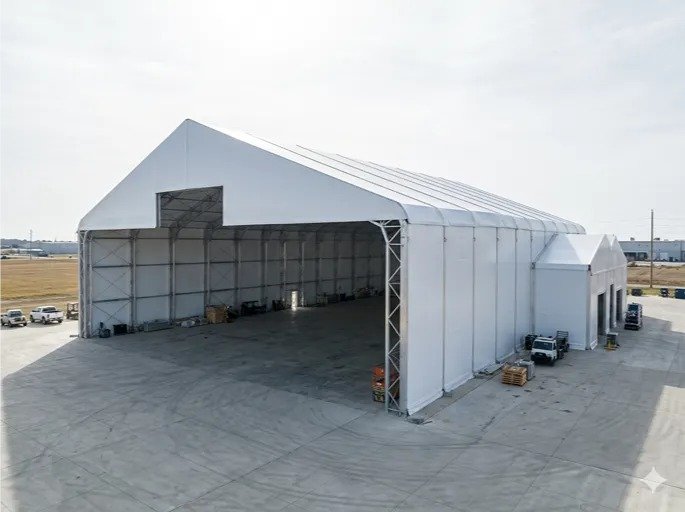
A major event is a big moment for the people running it. Thousands of guests may walk in, and the tent must look good, stay dry, stay cool and stay safe through the whole programme. Behind that calm look is a lot of careful design work.
If you are planning aluminium hangar tent design for events, it helps to know what goes into it. In this guide, we look at the main design points, with a special focus on the fabric, because the fabric is what guests see, touch and rely on for shelter.
What Is an Aluminium Hangar Tent?
An aluminium hangar tent is a large, clear-span tent. A light and strong aluminium frame holds up a fabric roof and walls. Because the frame is strong, the inside can be wide open with no centre poles blocking the view.
This open space is why these tents are so popular for:
- Weddings and large celebrations
- Corporate events and product launches
- Trade shows and an exhibition tent structure
- Sports and music events
- Temporary storage, like a warehouse tent
Every one of these uses needs a slightly different design. A wedding needs a soft, elegant look. An exhibition needs good light and a clean surface. A warehouse tent needs strong cover and easy access.
Start With the Purpose of the Event
Good design begins with a simple question: what will this tent be used for?
The answer shapes everything else. A large event tent structure for a music show has different needs than one for a trade fair. Think about:
- How many people will be inside
- How long the tent will stay up
- What kind of weather it must face
- How the space will be used, such as seating, stalls or storage
- How guests will enter and move around
When the purpose is clear, every later choice becomes easier.
Size, Span and Layout
The size of an aluminium hangar tent depends on the crowd and the activity. Designers look at the width, the length and the height of the space.
Height matters more than most people expect. A taller roof gives better airflow and a more open feel. It also gives room for lights, stage setups and decoration.
Layout matters too. Doors, side openings and walkways should be planned so guests can move freely. For events with large crowds, clear entry and exit points are a key part of the design.
The Role of the Aluminium Frame
The frame is the skeleton of the tent. Aluminium is a popular choice for events because it is light, strong and does not rust. This makes it easy to handle and good for tents that are used again and again.
For anyone searching for an aluminium frame tent India, the frame sets the shape and span of the tent. But the frame and the fabric must work as one system. The fabric is cut and made to match the frame, so the final tent looks smooth and tight, not loose or wrinkled.
Why Fabric Is the Heart of the Design
If the frame is the skeleton, the fabric is the skin. It is the part that protects people from sun, rain and wind. It also sets the look of the tent, from the colour to the way light passes through.
For hangar tents, PVC and PVDF coated fabrics are widely used. Here is why they suit large event tents.
Strong woven base. A coated fabric has a woven base that gives it strength. This helps the fabric stay stable over a wide span.
Waterproof coating. The PVC coating keeps rain out, so events can carry on in monsoon weather.
Weather and sun resistance. Tents stand outdoors for long hours. A good coating protects the fabric from sunlight and dust.
Cleaner surface with PVDF. A PVDF top coat helps the fabric resist dirt, so the tent stays brighter and looks fresh.
Weldable seams. PVC fabric can be heat welded. Welded seams are clean and strong, and they help keep water out.
Cutting and Welding the Fabric to Fit
This is where design turns into a real product. A large tent roof is not one giant sheet. It is made from many fabric panels, each cut to a exact size and shape, and then welded together.
Accurate cutting is important. If the panels are even slightly off, the roof will not sit tight on the frame. Wrinkles, sagging and loose areas can appear, and these can collect water or flap in the wind.
Good welding is just as important. The seams hold the whole roof together. Clean, even welds make the tent stronger and give it a neat, professional look.
Planning for Weather
India has hot summers, heavy monsoons and strong winds in some regions. A tent for a major event must be designed with these in mind.
- Rain: The roof should be shaped so water runs off instead of pooling.
- Sun: Fabric colour and finish affect how much heat and light come through. Lighter shades keep the inside cooler.
- Wind: A tight, well-fitted fabric handles wind much better than a loose one.
Fabric that fits well and is made from quality coated material is a big part of keeping the tent safe and comfortable.
Light, Colour and Look
Event tents are as much about feeling as they are about shelter. Fabric colour and light transmission change the mood inside.
White and light shades give a soft, bright glow during the day. This is why many wedding and exhibition tents use them. Darker or printed fabrics can be used for branding and special effects. Wall panels can be plain, windowed or printed, depending on the event.
For an exhibition tent structure, a clean, light interior helps stalls and displays stand out. For a warehouse tent, the focus shifts to strong cover and practical use.
Safety and Fire Considerations
Large events bring large crowds, so safety is a key part of the design. Fabric choice plays a role here. Buyers should always ask about the fabric properties, including its safety features, and match them to the rules that apply to their event and location.
Good design also keeps exits clear, avoids crowding near walls and leaves space for emergency movement.
Choosing the Right Fabric Partner
Even the best tent design will not work with poor fabric. For large tents, fabric quality has to be the same from one panel to the next. This is why many buyers look for a trusted aluminium hangar & tent fabric manufacturer who understands how big tents are made and used.
A good fabric partner will help you pick the right coated material, cut it accurately and weld it cleanly, so it fits the frame properly.
Why Choose Lucky International
Lucky International focuses on PVC and PVDF coated fabrics for tents and hangars. Our coated textiles come from our partnership with SIOEN Industries of Belgium, known for engineered coated fabrics. We then shape them to customer needs through in-house design, cutting and welding.
We keep our attention on the fabric itself, because that is the part that decides how a tent looks, performs and lasts. Whether you are planning a wedding tent, an exhibition hall or a warehouse tent, our team can help you understand which coated fabric suits your project. If you are looking for a fabric manufacturer for aluminium hangar and tent projects in India, Lucky International is ready to talk about your requirement.
Frequently Asked Questions
What is an aluminium hangar tent used for?
It is used for large events like weddings, exhibitions, corporate shows and sports events. It is also used as a warehouse tent for temporary storage.
Why is aluminium used for event tent frames?
Aluminium is light, strong and does not rust, which makes it a good fit for tents that are used many times.
Which fabric is best for a large event tent?
PVC and PVDF coated fabrics are popular because they are waterproof, strong and weather resistant, and they can be welded into clean seams.
Why does fabric fit matter?
A well-cut fabric sits tight on the frame. This helps it handle wind, avoid water pooling and look neat.
Can the same tent be used as a warehouse tent?
Yes. The design of a warehouse tent is different, but coated fabric gives strong, weather-ready cover for storage use too.